Kharposhteh Apartment, DESIGNED BY SE-BÆR Studio

FROM THE ARCHITECTS
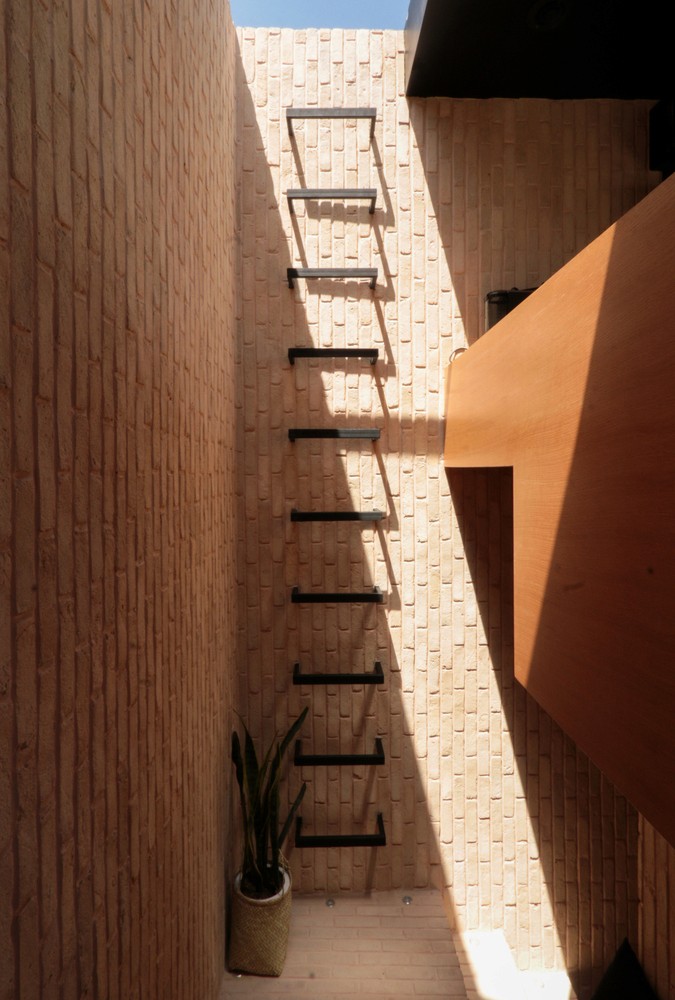
KHARPOSHTE (ROOF LIFE). The wind was alive in the highs and lows of the roof. There was air to breathe. One could forget that the roof was for “those frightened by rain and the sun.” I always walked barefoot on the roof. What a blessing we lost. Shoes are humanity’s last stand in denying the fall of man, an allegory of the sorrow being away from heaven has left us. There is evil in shoes. They create chaos in the healthy conversation between the earth and our feet. I used to be barefoot most of the time; on the roof, nothing was worth more than the rough layer of thatch under my feet. Base Plane. The project is related to renovating the loft and the rooftop of a two-story lodge situated in the historic district of Isfahan, south of the Abbasi Jame Mosque and Naqsh Jahan Square. It is an area where parts of its urban fabric have become gradually more surrounded by new constructions — with a height limitation of 6 to 9 meters. Subject. Not so far ago, roofs used to be considered crucial sectors of houses and cities. Citizens of Isfahan utilized roofs for multitudes of functions, including summertime sleeping accommodations, social areas to converse with neighbors, and fields for keeping pigeons — nostalgic scenes immortalized through the movie Majid’s Tales. Today, however, roofs have turned into deserted spaces for placing air conditioners, satellite dishes, water tanks, and storing undesirable objects. Considering the remarkable potential of such domiciles, how could we benefit from these abandoned spaces in the modern era? Is the expansion of this historic fabric feasible? Main idea. Even though many small-scaled yet spirited houses have been replaced by two- or three-unit apartments with no affinity to their context or landmarks, the prospect of this addition could serve as a prototype for reusing forgotten spaces. It is an appeal for a comprehensive plan for a “city placed on top of another,” called the Roof City. Design details. Initially, to turn the loft into a convenient room for guests, ducts, air conditioners, pipes, facilities, and unnecessary walls were removed or reorganized. The ceiling was cantilevered about a meter by reinforcing the structure, and an operable window was installed across the entire eastern front, unifying internal and external space when open. These adjustments maximize field of view and connection to the context. By repositioning the entrance to the downstairs landing, removing unnecessary walls in the staircase, widening the landing, and installing a skylight, a space for random experiences was created. To evoke a novel yet familiar atmosphere, all walls and interior/exterior floors were paved, referencing the prevailing texture and base plane.