Ederlezi House, DESIGNED BY Práctica Arquitectura
FROM THE ARCHITECTS
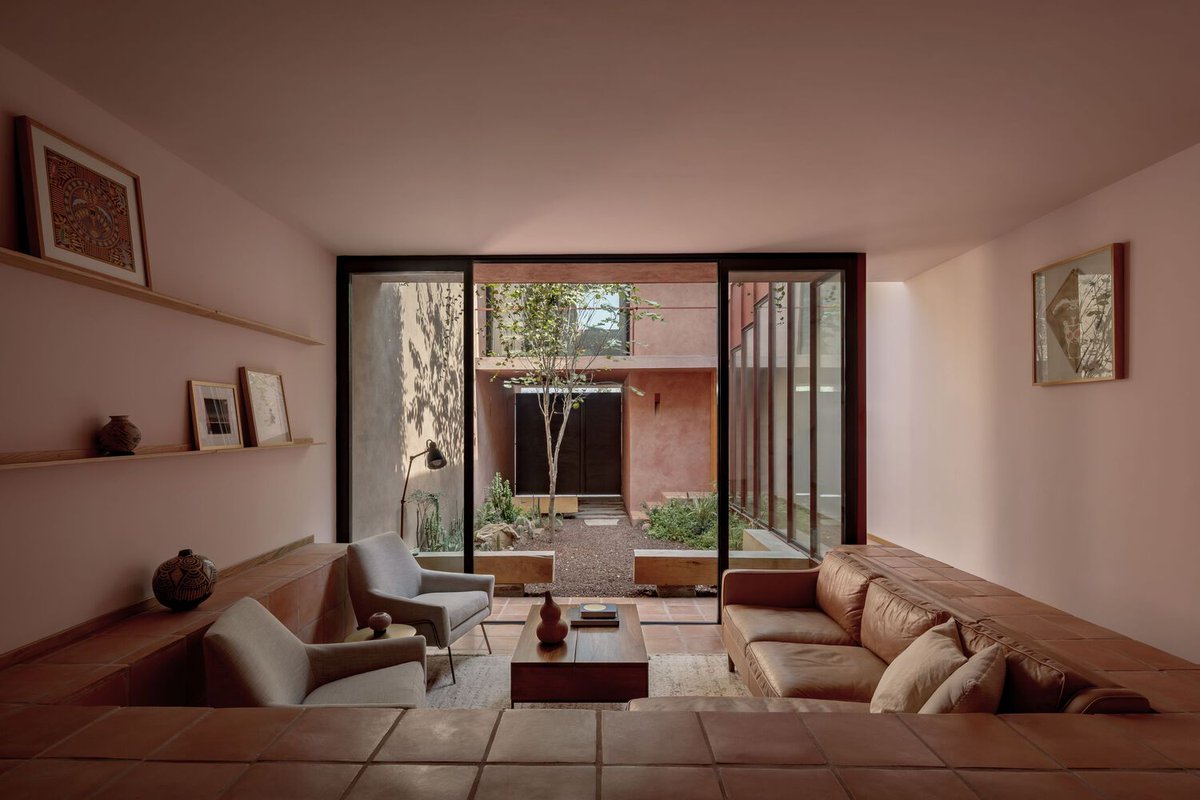
360 degrees of views of hills and mountains connect the user with the horizon from the terrace at the top of the house. The interior is different: robust reddish atmospheres, patios, and landscaped spaces invite a calm, more intimate, and disconnected life. Ederlezi is the name of the celebration that marks the beginning of spring in the Balkans and Turkey — a break from the gray winter expressed through music, dancing, and flowers. The contrasts between green vegetation and the red tones of the pasta on the walls, the tezontle in the gardens, and the doors seek to perpetuate the warmth and movement of that time of year, evoking memories of desert and Mediterranean landscapes referenced in conversations with the clients during design. From the particularity of its volumetry and the mysteries and surprises that define its routes, the personality of the house is built — deeply similar yet different from its context. It combines classic elements of northwest architecture, such as the base and the proportion of openings, with more abstract contemporary gestures. Built on a narrow plot 5 meters wide and 20 meters deep in the historic center of San Pedro Garza in the Monterrey metropolitan area, the house is organized around a spine of circulation and services along one boundary, and a central patio dividing the program into two volumes. The front volume contains the entrance hall, garage, a double-height guest room with mezzanine, and a rooftop terrace. The rear volume holds the living room, dining room, kitchen, a blue patio at the end of the plot, and the master bedroom with access to a landscaped terrace. Although the plan originates from a rational sequence of squares, the section is more dynamic — steps, platforms, overlapping doorways, and friezes that culminate in a red ziggurat forming a street-facing façade and resolving current heritage and conservation restrictions. Confronting both challenges and opportunities of building housing in historic districts of growing cities, the Ederlezi House reconciles the fluidity of open, ethereal space with the privacy needed to separate domestic life from the street. The project seeks to blur routine through the diversity of experiences it offers, while rethinking the long, narrow cadastral condition of this urban fabric as a fertile typology for exploration — one shaped by perforated, carved, and excavated volumes engaging in a stereotomic dialogue between the client, the house, and the mountain.
