Duplex, DESIGNED BY Atelier st, Gesellschaft von Architekten mbH
FROM THE ARCHITECTS
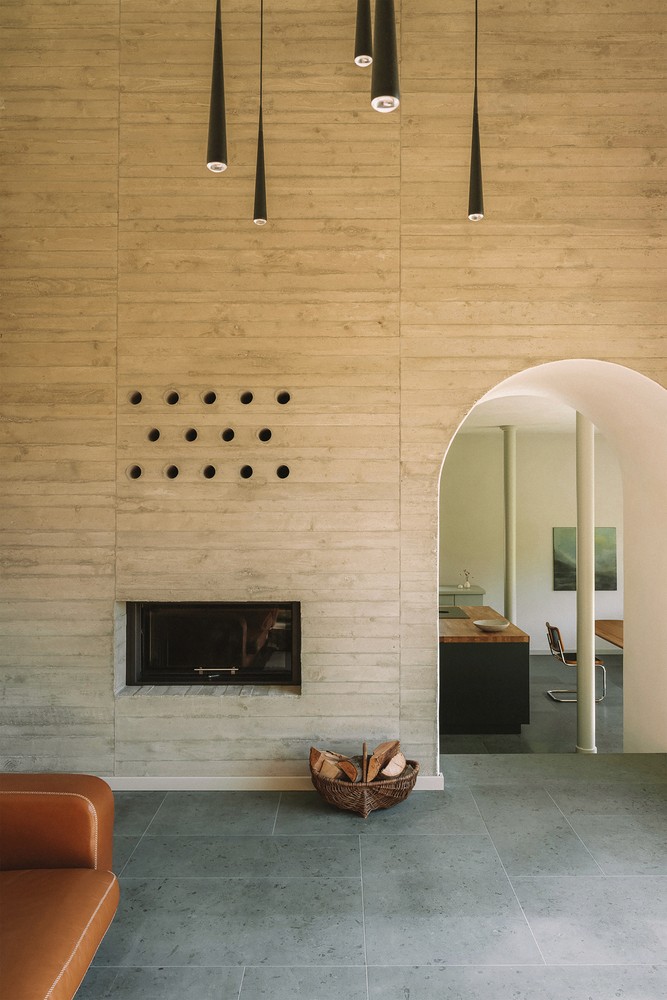
The property is located on the edge of a mature residential area in Portitz, in the northwest of Leipzig. In addition to its immediate proximity to nature, it is defined by the heterogeneous single-family housing of the neighborhood and the presence of established garden vegetation. Nature, the nearby forest, and the orchard played just as important a role as translating the surrounding buildings into a contemporary architectural language. The defining characteristics of the estate were translated into a gabled residential building — the archetypal form of a house that every child draws. But this basic figure did not remain alone. In keeping with the motto “two are better than one,” the overall building is composed of two offset, narrow house volumes. This approach makes it possible to stay within the building lines of adjacent structures, respond to the scale of the surroundings, and still accommodate the required program in a compact, centered manner. The pair of gabled forms play with the semi-detached houses nearby — with a subtle wink — transforming familiar local typologies into an independent architectural expression. Carefully placed openings frame views to the forest in the east and the orchard in the west. Between the street and the building, an arrival zone is created: a paved forecourt accommodating car parking and access to both entrance and garden. This protected threshold mediates between public space and private domesticity. The orchard to the west remains hidden from the street, reserved exclusively for residents. Terraces, a pool area, green screen walls, embankment walls, and clusters of planting combine to form a unique garden and recreational environment. Inside, the hard outer shell gives way to an interior conceived as a warm, sheltering cave. Curved reveals continue the theme of softened geometry. Two distinct volumes interlock into a complex whole. Clay plaster covers walls and ceilings, unifying the differently proportioned rooms. In public areas, shimmering green natural stone is used — also seen in bathrooms and showers. Upstairs, natural oiled oak parquet finishes the private spaces. The house is entered through a generous arched doorway from the east. Here, the forest opposite — along with its changing light — filters through finely structured glazing into a spacious foyer. From this point, one moves into a large cooking and dining area that opens to the garden. Adjacent is a separate, elevated living room, a retreat positioned a few steps above garden level. Extending up to the roof, with a fireplace set into an exposed concrete wall, the space has a distinct atmosphere. Private rooms occupy the upper floor, organized across slightly staggered levels. The master bedroom, dressing room, and bathroom sit on an intermediate landing. A few additional steps lead to the children’s, guest, and work areas, each with its own bathroom. Carefully placed windows connect each room to the surrounding nature.

