Apartment AT83, DESIGNED BY
FROM THE ARCHITECTS
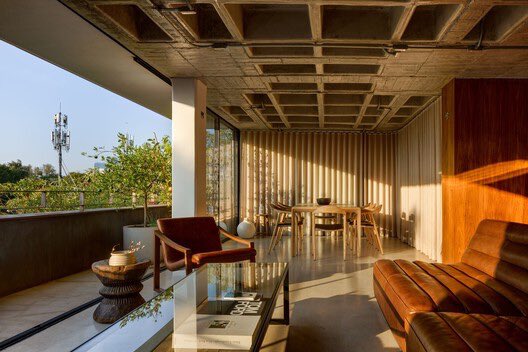
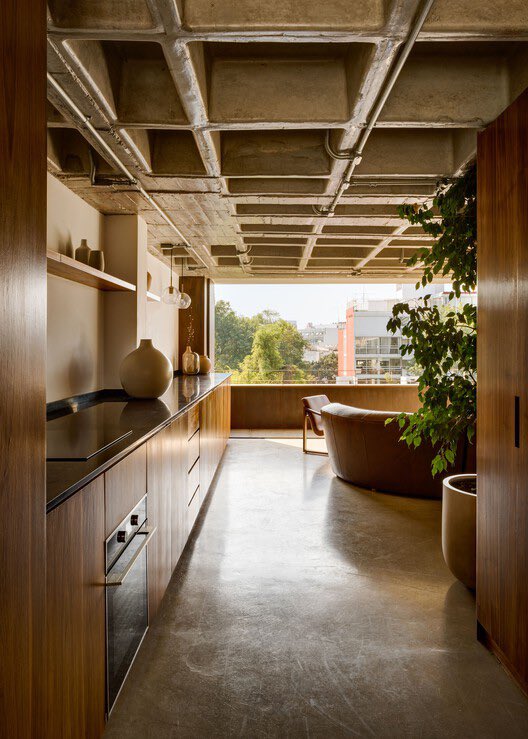
This project is the remodeling of an apartment in the Condesa neighborhood in Mexico City. The apartment is located in a building from the seventies. The original floor plan and layout of the apartment caused the space to feel dark and full of wasted areas. Yet the unit had many advantages ignored in the original project — wooded views, ventilation, and natural light, all rare in the area. The original finishes were typical of the era: parquet and terrazzo floors, stucco, and textured ceilings and walls. The renovation was guided by principles of opening up the space, maximizing light and cross-ventilation, and creating modular, more flexible rooms. The building’s structure — columns and a reticular slab — allowed the designers to redistribute the entire interior, since no wall was load-bearing. The first move was to remove partitions to allow daylight to pass from one side of the apartment to the other. A flexible intermediate zone was created to divide the private and public areas. Designed with folding doors, this space can operate in three different modes: 1. as part of the private area, 2. as part of the public area, or 3. as an open buffer between the two. Because the apartment had a very tight mezzanine height, all ceiling fixtures were removed, gaining 7 cm and improving spatial clarity. The existing balcony was narrow and barely usable. To expand its functional presence, the architects conceived the apartment as an extension of the terrace — mirroring interior and exterior floor finishes, integrating planters, and using glass and materials that enhance light. An indoor/outdoor continuity was central to the project. Material selections focused on natural, essential finishes with a raw yet elegant feel: exposed concrete, wood, glass, and rusted steel. In the dining room, curtains were used to soften the harder materials and create a warmer microenvironment. Overall, the apartment now integrates spaces subtly and openly, achieving a quiet, understated elegance.